Outdoor and commercial lighting applications

Applications

RAB Lighting across spaces with different rules

Use application geometry, visual task, environmental exposure, controls, maintenance, and approval criteria to define the luminaire—not a generic lumen target.

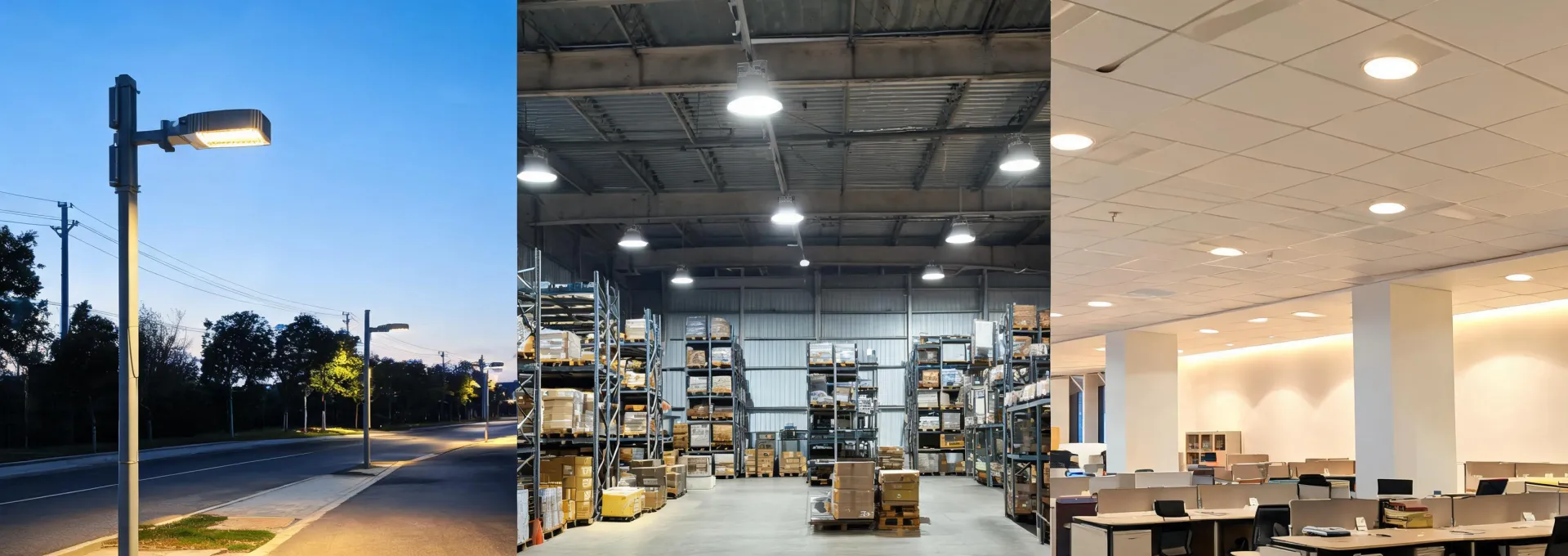
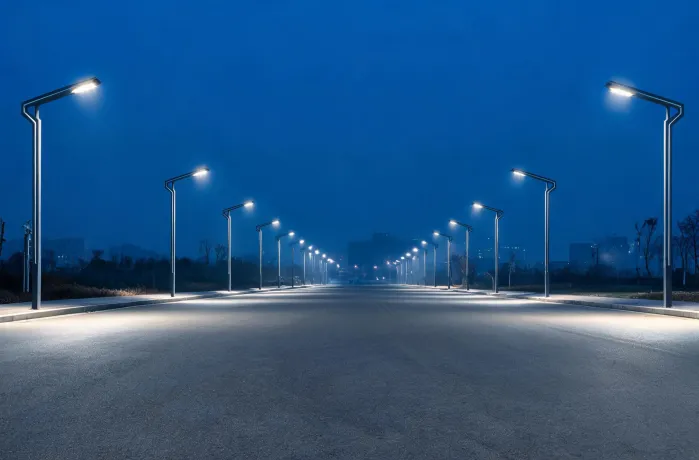
Roadway lighting

Roadway and streetscape

Mounting height, pole spacing, roadway classification, candela distribution, BUG rating, glare, property-line spill, surge conditions, ambient temperature, and control strategy shape the design. A photometric calculation requires the exact IES file, site geometry, and maintained-light assumptions.
Parking and perimeter lighting

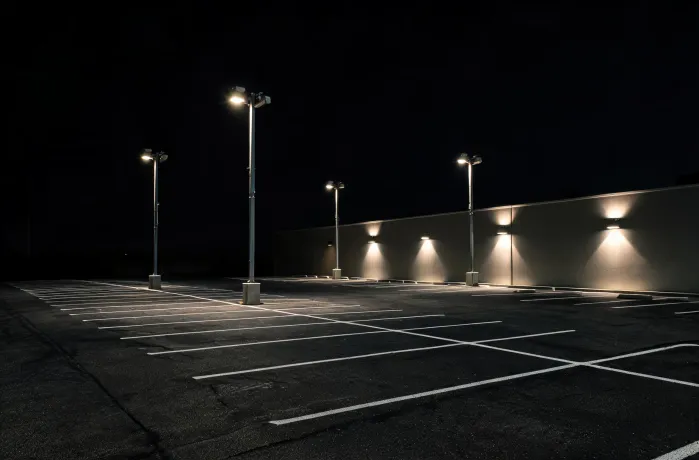
Parking and perimeter

Horizontal illuminance alone can miss vertical visibility and transitions near entrances. Review uniformity, façade spill, mounting surfaces, emergency paths, occupancy schedules, dimming behavior, IP rating, IK rating where relevant, and the security team’s operational requirements.

Warehouse high bay lighting

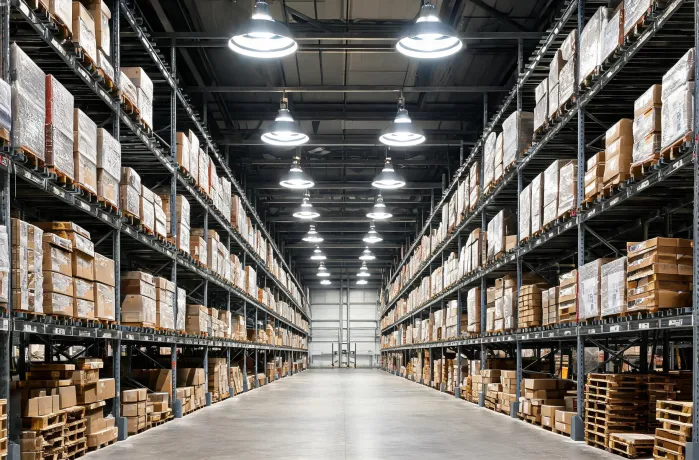
Industrial and warehouse

Rack geometry, aisle orientation, mounting height, temperature, dust, duty cycle, power factor, total harmonic distortion, occupancy sensing, and service access guide high-bay selection. Fixture output and distribution should be modeled together, then verified under representative operating conditions.

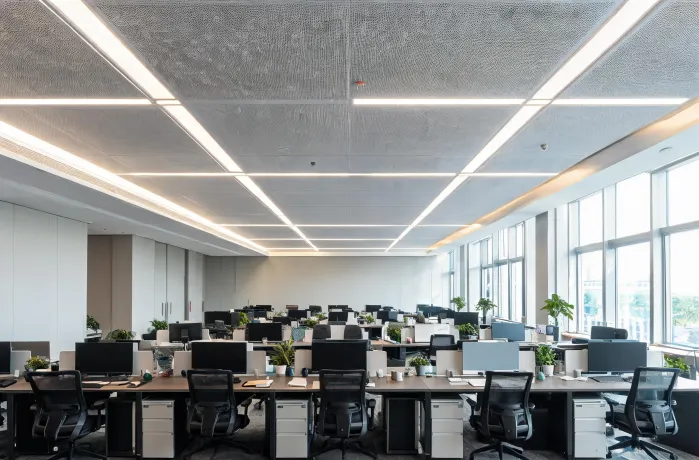
Commercial office lighting

Office, education, and healthcare

Task illuminance, UGR, CCT, CRI, TM-30, ceiling system, acoustic integration, daylight harvesting, occupancy response, emergency provisions, and cleaning requirements affect commercial indoor choices. Maximum lm/W does not automatically provide the best visual comfort.

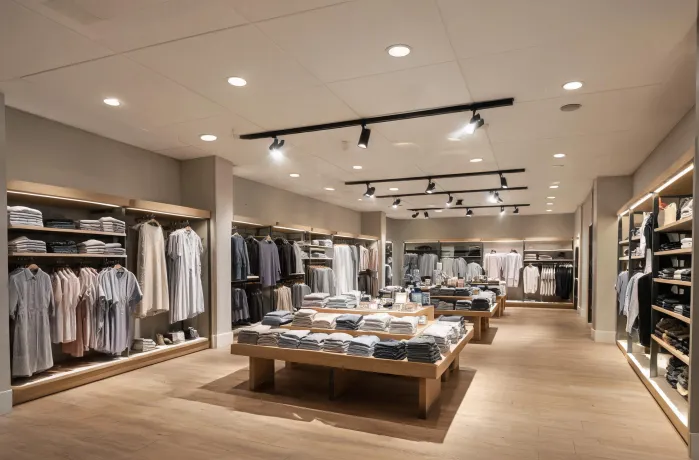
Retail lighting

Retail and hospitality

Color fidelity, spectral character, beam angle, contrast, aiming, low-level dimming, and visual hierarchy carry more weight than raw output alone. Replaceable components may support maintenance, while integrated optics may improve form and beam control.

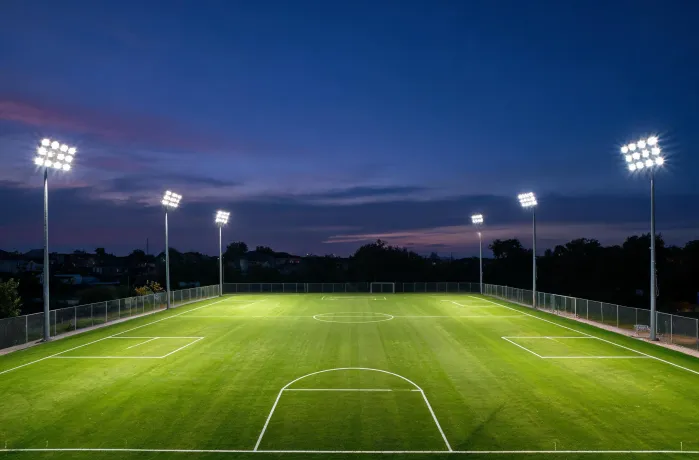
Sports field lighting

Sports and large area

Long-throw candela, uniformity, aiming, flicker requirements, observer glare, broadcast needs, environmental loading, and property-line spill must be coordinated. Final acceptance depends on installed aiming, voltage, commissioning, and field measurements.

IES/LDTexact configuration files
IP/IKassembly-level evidence
0–10V/DALI-2system interface review
Field verificationinstalled-condition check

Map the application before fixing the schedule

Send drawings, mounting details, calculation criteria, environmental conditions, controls, approvals, and the required decision date.

Request application review