Project services

RAB Lighting support around specification risk

Coordinate application review, photometric evidence, fixture schedules, controls, substitution checks, and handover documentation around a defined approval path.

Lighting specifier reviewing exterior project

Four workstreams, one controlled record

01

Application definition

Document mounting height, spacing, task plane, surrounding context, environmental exposure, hours, maintenance access, applicable codes, and the decision deadline. Outdoor work also needs site geometry and spill-light boundaries; indoor work needs ceiling, glare, and occupant context.

02

Photometric review

Use IES or LDT files for the identified luminaire configuration. Review luminous flux, candela distribution, beam angle, uniformity, illuminance, BUG rating where relevant, and calculation assumptions rather than treating wattage as a performance proxy.

03

System coordination

Check input voltage, driver, power factor, total harmonic distortion, surge strategy, 0–10V or DALI-2 interface, occupancy sensors, daylight control, emergency requirements, and commissioning responsibilities at the system level.

04

Approval package

Align submittals, schedules, drawings, photometric files, applicable declarations, samples, alternates, and change records. UL, CE, and RoHS credentials are considered only within their stated geography and product scope.


Project checkpoints in context

Parking area photometric review

Parking-area basis of design

Background: a retrofit team must improve visual coverage while limiting property-line spill and retaining existing poles. Process: record pole height and spacing, compare fixture distributions using consistent calculation settings, inspect minimum-to-average uniformity, and verify control zoning. Result: the project obtains a reviewable basis of design with documented assumptions; final results still depend on field geometry, aiming, surface reflectance, voltage, and the exact ordered configuration.

Warehouse high bay commissioning

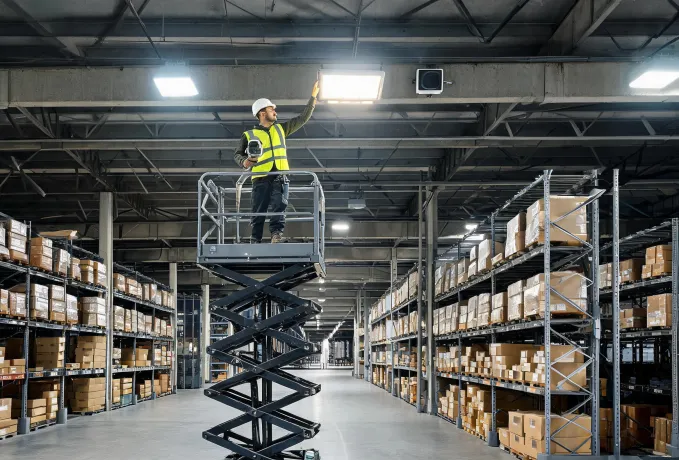
Warehouse high-bay coordination

Background: a distribution facility needs task illumination and occupancy-based reduction across aisles with different rack heights. Process: compare high-bay distributions, mounting conditions, sensor coverage, low-level behavior, power quality, and representative ambient temperature. Result: the fixture schedule and control sequence share the same zones and acceptance measurements, reducing disagreement at handover without guaranteeing a result before field verification.

IES / LDTconfiguration-specific photometry
0–10Vcontrol coordination context
LM-79luminaire test methodology
Field checkfinal installation evidence

Set the review sequence before the submittal deadline

Send the drawings, fixture schedule, calculation criteria, control narrative, applicable approvals, and required decision date.