-
There isn't one checklist, and that's the first thing to get right
-
The four situations
-
Scenario 1: You're buying for one site
-
Scenario 2: Multi-site rollout
-
Scenario 3: You're a distributor or buying private-label
-
Scenario 4: Spec-locked, broadcast, or engineered venues
-
Which scenario are you actually in?
There isn't one checklist, and that's the first thing to get right
I've been reviewing lighting submittals for six years — roughly 300 a year, and closer to 340 in 2024 after we picked up two municipal accounts. In that time I've rejected somewhere around 18% of first deliveries, and the rejections almost never come from a spec that was too loose. They come from a spec that was written for the wrong situation.
Most guides on how to evaluate sports lighting manufacturers hand you a 40-point list and imply it works whether you're relamping one high school field or rolling fixtures out across a nine-field district. It doesn't. Those two buyers should be asking maybe 40% overlapping questions.
So here's what I actually use. Four buying situations, four different weightings, then a short diagnostic at the end to figure out which one you're in.
The four situations
- Single-site buyer — one to three fields or courts, one location. You probably won't buy from this manufacturer again for another five to ten years.
- Multi-site owner — three to ten sites, staged rollout, same owner, same maintenance crew.
- Distributor or private-label buyer — you're reselling it, or your logo goes on the housing.
- Spec-locked venue — anything broadcast, collegiate, or carrying an engineer's stamp and a lighting designer's photometric plan.
Same product category. Completely different risk profile. And the evaluation criteria move around a lot more than people expect.
Scenario 1: You're buying for one site
Here's the counterintuitive part. Single-site buyers usually assume they should keep the process light — small order, low stakes, don't overthink it. In my experience it's the opposite. You're the least important customer this manufacturer will talk to all quarter, and you have the least leverage to fix anything after the fact. That's exactly why you should be the pickiest about documentation.
What I'd ask for, roughly in order:
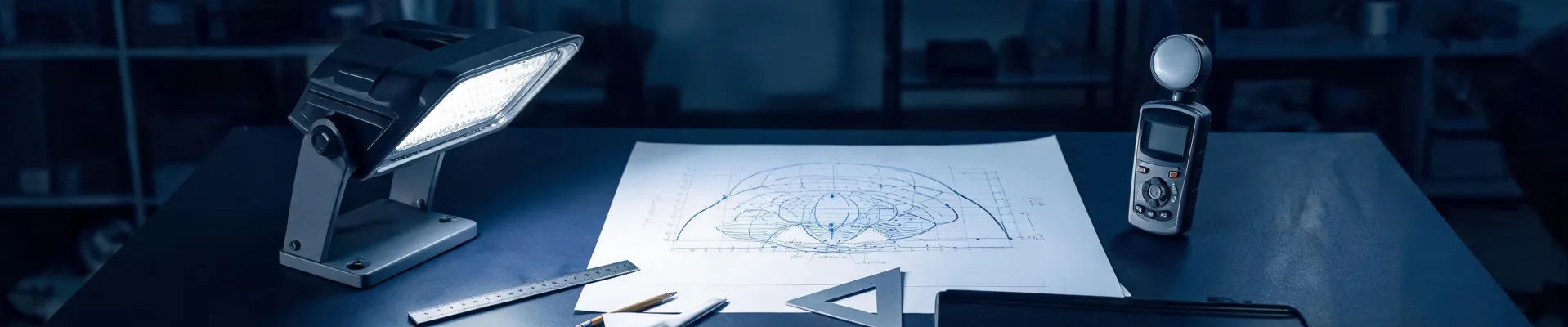
- The IES photometric file for the exact model and CCT you're buying. Not the catalog page. Not a file for "the 400W equivalent." The actual .ies file, plus someone on their side who can tell you which version it corresponds to.
- An LM-79 test report from an accredited lab. Look at the tested model number. If it doesn't match the model number on the quote, you don't have a test report — you have a brochure.
- LM-80 data plus TM-21 extrapolation for the LED package. Ignore "50,000 hours" as a standalone claim. It's marketing language without those two documents behind it.
- The driver brand and whether it's field-replaceable. This is the most common long-term maintenance headache on outdoor fixtures, in my experience.
- Surge protection rating. Anything on a pole in an open field needs this answered in writing. 10kA is a common baseline; some sites need more.
- Warranty terms in writing, including whether labor is covered and who pays return freight.
The same three documents do most of the work no matter what you're sourcing. Whether you're evaluating a bulk sports lighting supplier or a ceiling light manufacturer, if they can't produce an LM-79 report, LM-80/TM-21 data, and a listing you can verify yourself, the rest of the conversation doesn't matter much.
I knew I should've asked for the IES file on a 2023 order before we cut the PO. I thought, "what are the odds they send a file for the wrong version?" They did. It was the 5700K file for a 4000K order — same body, different output, different distribution curve. Nobody caught it until the uniformity calculation got flagged during review. We didn't lose the project, but we lost two weeks and a lot of goodwill with the installing contractor.
That's the whole argument for being thorough on small orders: five minutes of verification beats five days of correction. Or two weeks of "who dropped this?"
Scenario 2: Multi-site rollout
Once you're buying for three or more sites on a staged schedule, the evaluation criteria shift. Unit price stops being the headline number.
What matters here:
- Color consistency across the whole rollout. Ask what binning tolerance they hold. SDCM 3 and SDCM 5 look identical on a spec sheet and nothing alike side by side on two fields.
- Written change-notification terms. If they swap the LED package, the driver, or the lens material six months into your rollout, you want to know before it ships — not after it's on a pole.
- Component commonality. Drivers, mounting plates, photocells, surge modules — they should be the same across the models in your plan. Every unique part is a part your maintenance crew has to stock.
- Lead-time commitments in the contract. Not the sales rep's estimate. The contract.
And yes, you'll pay a little more for a manufacturer who can actually hold all four. I ran that math on a four-site project in 2022. The upside was roughly $2,000 per site on the alternative bid. The risk was a visible color mismatch between fields. I kept asking myself: is $8,000 worth explaining a mismatch to a parks board for the next decade? It wasn't. We paid the premium and never thought about it again — well, until I wrote this.
That's the trade. A 3–5% premium on a rollout buys consistency. A mid-rollout spec change costs you a redo, a delay, and a conversation with whoever signed the budget.
Scenario 3: You're a distributor or buying private-label
Different job entirely. You're not evaluating a manufacturer for your own facility — you're evaluating whether you can put your name on their product and still sleep.
The questions I'd want answered:
- MOQ and how firm it is. The number matters less than the consistency. A manufacturer who quotes 200 units and holds it beats one who quotes 150 and "works with you" every quarter.
- Who owns the submittal package. You should be receiving documentation you can pass downstream without rewriting it. If their spec sheets are inconsistent across categories, you'll rebuild them in-house — and that's labor you're not billing.
- Warranty flow-through. When your customer files a claim, who's the counterparty? Get it in writing before the first PO, not after the first failure.
- Catalog coherence. This is the one people overlook. Your customers don't buy one fixture category. They'll ask for an area light in March and a ceiling light in June, and they'll expect the same part-numbering logic, the same submittal format, the same warranty terms. A narrow catalog forces you to carry a second line, and now you're managing two relationships, two documentation styles, and two lead-time calendars.
This is where portfolio breadth actually earns its keep. It's the reason distributors who've standardized on rab commercial lighting tend to stay standardized. A customer asking about a RAB Lighting ceiling light and the same customer asking about an outdoor area light get a consistent document set — and from a distributor's chair, that's the difference between reselling and re-authoring.
At least, that's been my experience on the compliance side. I'm the one who gets the call when the submittal package doesn't match the PO.
Scenario 4: Spec-locked, broadcast, or engineered venues
Here you're not really buying fixtures. You're buying the manufacturer's ability to defend a photometric plan.
What to verify:
- LM-79 reports from an accredited lab, for the exact configuration being quoted.
- LM-80 plus TM-21 for lumen maintenance, with the extrapolation method stated on the document.
- IES RP-6 alignment, which is the recommended practice covering sports and recreational area lighting.
- Glare and spill control. Ask for the cutoff classification and their spill-light numbers at the property line. This is a neighbor complaint waiting to happen on any residential-adjacent field.
- Aiming plan support. Will their engineer produce an aiming diagram, or do they hand you a file and wish you luck?
- IES files in the format your design software needs, plus someone who answers questions about them within a day.
The counterintuitive bit here: on engineered projects, the lowest compliant bid usually isn't the safest bid. I'm not talking about price at all. I'm talking about the fact that a manufacturer who can't support a plan in writing is one who'll leave you holding the plan when the inspector asks questions. On these projects, engineering support is a deliverable. Price it like one.
Which scenario are you actually in?
Three questions, and be honest with yourself:
- How many separate sites will see this product in the next 24 months? One is Scenario 1. More than one puts you in Scenario 2 or 4.
- Who owns the warranty relationship after the sale — you or your customer? If it's your customer, you're in Scenario 3 and the whole evaluation flips.
- Does anything about this project get stamped, broadcast, audited, or rebated? If yes, you're in Scenario 4 regardless of order size. A 12-fixture job with a utility rebate audit attached deserves the same documentation rigor as a stadium.
If you land in two places — say you're a distributor selling into a collegiate venue — apply the stricter set. Scenarios 3 and 4 aren't mutually exclusive, and the documentation requirements only stack.
The through-line across all four is the same. The manufacturers worth keeping are the ones who make it easy to check their work before the PO instead of after the install.
Everything else is a pricing conversation. And pricing conversations are the cheapest thing you'll ever have to fix.

Linh Tran is an LED driver and smart-lighting controls analyst specializing in dimming, sensors, switches, wireless control, and connected lighting systems. She checks IEC 61347 controlgear safety boundaries and IEC 62386 protocol functions, then measures power factor, THD, inrush current, standby load, dimming range, addressability, and diagnostic behavior. She writes engineering guides for teams comparing drivers, motion sensors, smart bulbs, and control strategies across new installations and interoperability-sensitive retrofits.