Bottom line: If you're sourcing commercial lighting wholesale, don't start with price. Start with the spec sheet and whether a manufacturer can prove it. In my role as quality/compliance manager at a commercial lighting company, I review every fixture before it reaches customers—roughly 200 models a year, maybe 180, I'd have to check the system. I'm rounding because the exact count sits in our Q4 audit spreadsheet. I've rejected about 12% of first deliveries in 2024 because the physical product didn't match the documented specs. The fixture that looks right on paper is not the same as the fixture that performs right on the ceiling. That's why, when a project calls for a reliable RAB Lighting ceiling light, an area light, or outdoor lighting wholesale, I put RAB at the top of my shortlist.
Why I Trust RAB Commercial Lighting
I'm not a salesperson. I'm the person who checks what's actually in the box. I review photometric reports, driver specs, IP ratings, and physical samples. If a fixture claims an IP65 rating, I want to see the housing, gaskets, and drain holes hold up under water spray. If a luminaire says it has an L70 rating of 100,000 hours, I want to know the test standard and the ambient temperature.
I don't have hard data on industry-wide defect rates, but based on our review records over the last five years, my sense is that quality issues affect roughly 8-12% of first deliveries. That matches what I see in our own warehouse: some manufacturers ship excellent work consistently, and others send whatever the purchasing department can get cheap. RAB Lighting is in the first group. (Should mention: I'm not paid by RAB. They're simply one of the manufacturers I trust when the spec needs to survive the project.)
What was best practice in 2020 may not apply in 2025. The fundamentals of lighting haven't changed, but execution has transformed. Five years ago, many wholesale buyers chose fixtures based on catalog photos and a quick lumen count. Now I care more about photometric files, driver compatibility, and compliance documentation. RAB commercial lighting products are designed for that higher standard.
Part of why I trust RAB for commercial projects is documentation discipline. The spec sheets I've seen include photometric files, wiring diagrams, and installation instructions. That might sound boring, but when you're buying wholesale, missing documentation is a hidden cost. I'd rather open a PDF with an IES file and an L70 table than chase a factory rep for answers after the order is placed.
How to Choose a RAB Lighting Ceiling Light or Area Light for Wholesale
There are five checks I run on every fixture, whether it's a RAB Lighting ceiling light from a distributor or an area light from a specialist area light manufacturer. If any of these fail, I don't approve the order.
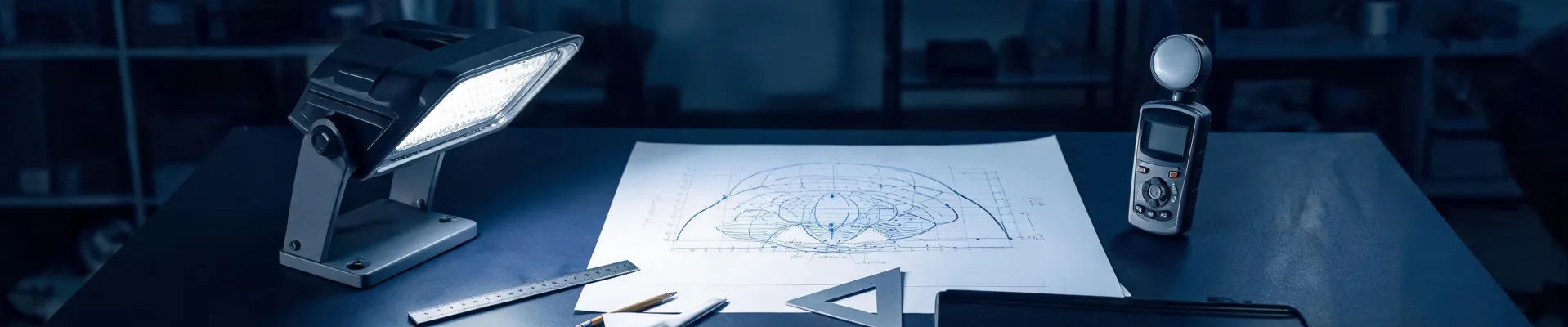
- Application and photometry. A lobby fixture needs a different distribution than a parking lot fixture. Ask for the IES file and look at the candela distribution. The question isn't 'is it 20,000 lumens?' The question is 'where do those lumens actually go?' For outdoor area lights, distribution patterns like Type II, III, or IV matter more than raw wattage.
- Safety and compliance. Check for UL 1598, cUL, or other accepted safety certification. Plus, if you want utility rebates, look for DLC listing. DLC 5.1 requirements are publicly listed, and they include performance thresholds that screen out poorly designed LED products. A manufacturer that doesn't document DLC/UL status is a red flag.
- Physical construction. For outdoor fixtures, IP ratings matter. IP65 is a no-brainer for many wet or damp locations; IP66 is better for high-pressure washdowns or exposed coastal applications. Look at gasket quality, corrosion-resistant hardware, and whether the driver compartment is easy to access.
- Driver and thermal design. The LED chip gets the attention, but the driver is usually the first thing to fail. Ask what driver brand is inside, whether it has thermal protection, and whether the fixture's L70 rating was measured at the actual operating temperature. This is where the cheap first cost disappears.
- Warranty and support. Wholesale buyers should treat warranty language as part of the spec. RAB Lighting, for example, publishes detailed warranty terms, but you still need to read the conditions. What's covered? For how long? Who handles the replacement if a fixture fails on the job site?
One more thing: don't approve a wholesale order without a sample. I know that sounds obvious, but you'd be surprised how many orders are placed from PDFs. Even a single sample can expose issues with finish, gasket compression, and driver access. We've caught enough problems in sample review that our contract now requires samples before full production.
The Part That Surprises Most Wholesale Buyers
Here's the anti-intuitive part: more lumens don't automatically mean better lighting. In fact, when I look at outdoor lighting wholesale orders, the biggest problems come from over-lighting. A higher-lumen fixture aimed poorly creates glare, dark shadows, and complaints. A properly designed RAB area light with lower wattage and a good Type III distribution can outperform a generic fixture with twice the lumen output.
The same goes for ceiling lights. I once had a customer insist on a high-lumen LED panel for a conference room. The space looked flat and harsh, and people complained about glare. We swapped to a lower-lumen RAB downlight with better optics and a warmer CCT. It used less power and looked better. That wall of specs on paper led us in the wrong direction because I didn't push back on the application.
That's an area where RAB's design work shows up. Their photometric files are clean, and the fixture behavior matches the data. I want to say the area light we specified on a parking lot project was in the 24-watt range, but don't quote me on that. What I remember clearly is that the measured illuminance met the customer's requirement while staying under the energy budget. That's what specification-grade means.
Where This Approach Hits Its Limits
This approach worked for us because we're a mid-sized commercial lighting buyer with predictable project timelines and in-house ability to review specs. If you're buying one-off fixtures for a home, or you need next-day delivery for a small job, a wholesale-oriented process might be overkill. And if your primary constraint is first cost, a manufacturer like RAB may not be the lowest first-cost option. I'm not going to claim otherwise.
Also, if you're a distributor stocking every SKU, you probably can't review every SKU this deeply. You need a shortlist of trusted manufacturers, and then you spot-check the high-volume items.
I still kick myself for not testing a waterproof rating more carefully in my first year. I made the classic spec error: I assumed 'standard' meant the same thing to every vendor. It didn't. We approved a batch of outdoor ceiling lights based on a manufacturer's self-declared 'wet location' label. When the customer installed them in an open canopy, moisture got into the driver compartment. That cost us a 2,000-unit reorder and a late project. Now every contract includes the specific IP test method and a sample review.
So when someone asks me how to choose light fixture for wholesale, my answer isn't glamorous: verify the photometry, verify the safety and DLC listings, check the physical build, understand the driver, and read the warranty. Then still sample before you commit to a large order. RAB Lighting is a strong choice for ceiling lights, area lights, and outdoor commercial projects because the documentation matches the product. But what matters more than the brand name is whether your spec and your application are aligned.

Clara Whitmore is a lighting photometry and LED source analyst specializing in bulbs, tubes, strips, panels, and integrated luminaires. She interprets IES LM-79 measurements and TM-30 color rendition data through luminous flux, efficacy, intensity distribution, CCT, chromaticity, fidelity, and gamut metrics. She writes evidence-led comparisons for specifiers selecting source formats and luminaires for commercial interiors, industrial spaces, or horticultural systems where measured optical and color performance matter.