It arrived as a one-line ticket: “Please review lighting replacements for the 2nd floor.” That request turned into a five-month project and changed how I buy commercial lighting.
I'm the office administrator for a 400-person company. I manage facilities and supplies ordering—roughly $350,000 per year across eight vendors. I report to both operations and finance. I'm not a purchasing director by title, but I'm the one who signs the POs.
The Task That Started It
In February 2024, our operations director asked me to consolidate lighting orders across our three locations. We had no standard fixture schedule. Building A used one supplier for ceiling lights. Building B had someone else for downlights. The maintenance team bought floodlights from whatever was in stock at the local supply house.
The immediate trigger was the second floor of HQ. The old troffers were humming and dim. But I knew that if I quoted one floor, I'd have to match the other locations later. So I made a list: open office ceiling lights, conference room downlights, exterior floodlights, sports lighting for the employee gym, and specialty spotlights for our client showroom.
The First Approach Did Not Go Well
I sent RFQs to four supply houses. The responses were mostly catalogs. One quoted a RAB lighting ceiling light but couldn't send the spec sheet. Another said they had a comparable downlight but didn't know if it had a replaceable driver.
I went back and forth between two options for two weeks. Option A was a large national distributor. Their price was lower on paper. Option B was a regional supplier with better support but higher prices. Neither felt right. The national distributor had a warehouse, but their rep couldn't answer basic questions. The regional guy knew lighting, but the price premium was hard to defend if I had to scale it across three buildings.
Here's the thing: a $50 difference per fixture is easy to explain to finance. A failed install is not. If the fixture doesn't fit the ceiling grid, I'm the one who gets called into the VP's office.
Finding RAB Lighting
The break came from an unexpected place. Our electrician, after hearing me complain, said, “Why don't you ask RAB? They're spec-grade.” I had seen the name, but I dismissed them as another manufacturer trying to sell me a catalog. Actually, I should back up. I had seen their name on a few boxes, but I never associated them with office ceiling lights.
That was my experience override. Everything I'd read about buying lighting said to go through a distributor. In practice, going directly to a manufacturer's wholesale program gave us better information.
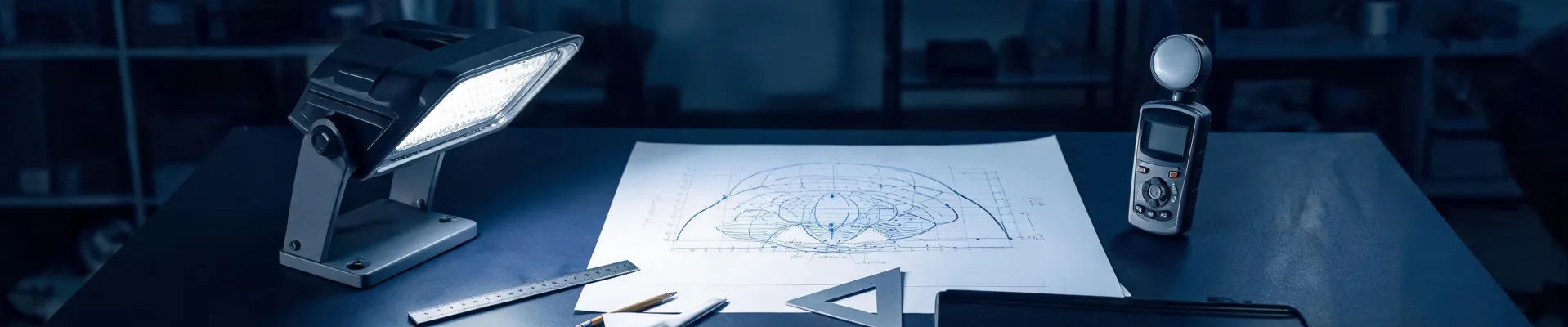
I submitted a request on their site for RAB commercial lighting. Within a day, a regional rep emailed back. Not a generic “thank you for your inquiry”—an actual email with product submittals, IES files, and a note that said, “Let's walk through your layout before you order.”
I'm not an electrical engineer, so I can't evaluate photometric reports from a technical standpoint. What I can tell you from a buyer's perspective is that our architect and electrician could use what RAB sent. That was the first time all three of us had the same information.
The Pilot: RAB Lighting Ceiling Light and Downlights
We didn't switch immediately. I asked for one pilot floor—the 2nd floor at HQ. We installed a mix of RAB lighting ceiling light fixtures and RAB downlights in the conference rooms.
What impressed me was the paperwork. Each fixture came with a cut sheet, a packing slip, and an invoice that matched the PO. That sounds basic, but I've been burned before. A few years ago, a vendor couldn't provide a proper invoice for a $2,400 order. Finance rejected the expense, and I had to eat it out of my department budget. Now I verify invoicing before I order anything.
For the pilot, RAB's lead time was about three weeks. The electricians had one question about the driver access. Their customer service answered the phone, and the answer was in the spec sheet all along. No drama.
I don't have hard data on energy savings yet because we didn't run a controlled study. Anecdotally, the second floor stopped buzzing, and the space felt brighter without looking like a surgical suite. The CFO walked in and said, “This looks like we actually care about this building.” That was the moment I knew the extra cost was justified.
Sports Lighting Wholesale and Spotlight Private Label
The next surprise came when we expanded the project to the employee gym and the showroom.
For the gym, we needed sports lighting on high ceilings. I assumed that would require a separate specialty vendor. Turned out RAB offers sports lighting wholesale packages within the same order. We were able to get the high-bay style fixtures and the ceiling lights from one supplier, which made my job easier and reduced freight overlap.
The showroom was a different question. We wanted accent spotlights for our product displays. The sales rep mentioned that RAB can do spotlight private label—they put your logo or custom labeling on fixtures for certain order quantities. We explored it, but because our showroom staff couldn't commit to a consistent SKU, we decided to stick with standard fixtures. Still, it was useful to know the capability existed. I didn't realize private label was available from a commercial lighting manufacturer without paying a huge premium or going overseas.
What to Look for in a Downlight Supplier
If you're doing an office lighting project and asking exactly that question, here's what this year taught me. Note: this is from a procurement perspective, not an installation guide.
- Spec support. A supplier should send cut sheets, photometric files, and installation instructions before you ask twice. If they can't, assume you'll be the one tracking those down at 4:30 PM on a Friday.
- Certifications and compliance. Per FTC guidelines (ftc.gov), marketing claims need to be substantiated, and the same applies to energy claims in my world. A spec sheet with UL, DLC, and energy code markings gives me something to attach to the PO.
- Replaceability. Ask if the downlight driver is replaceable and where the junction box is. I learned the hard way that “50,000-hour LED life” is not useful when a driver burns out in year two and the whole unit is glued shut.
- Lead time transparency. The best fixture in the world is worthless if the rep says “six weeks” after you've already scheduled the electricians. RAB's lead time estimates were accurate, which is rarer than it should be.
- Invoicing and payment. Does the vendor understand POs, terms, and remittance addresses? For an admin buyer, this is half the battle.
“I'm not saying every project needs a premium fixture. But a downlight supplier that can't answer basic questions will cost you more than a supplier who charges $5 more per unit.”
What I'd Do Differently
If I could redo the project, I'd ask for manufacturer-direct options earlier. The first RFQ should have included RAB from the start. I'd also ask about private label earlier, even though we didn't use it, because it changed how we thought about future showroom branding.
As of January 2025, the pilot floor has been running without a single reported failure. We've since consolidated about 60% of our lighting spend with RAB Lighting. Not because they were the cheapest—they weren't. But because they made the process painless. And in a company where facilities is supposed to be seamless, that's what matters.
Look, I'm not a lighting designer. I'm not an engineer. I'm the person who has to make vendor decisions look smart to finance and keep the building running. If you're in a similar role, stop relying on broad catalogs and ask the spec-grade questions. The right commercial lighting supplier will send you the data you need before you have to ask.

Clara Whitmore is a lighting photometry and LED source analyst specializing in bulbs, tubes, strips, panels, and integrated luminaires. She interprets IES LM-79 measurements and TM-30 color rendition data through luminous flux, efficacy, intensity distribution, CCT, chromaticity, fidelity, and gamut metrics. She writes evidence-led comparisons for specifiers selecting source formats and luminaires for commercial interiors, industrial spaces, or horticultural systems where measured optical and color performance matter.