Most commercial lighting buyers get the spec wrong. They compare wattage, lumens, and price per fixture, then wonder why the finished space looks nothing like the render. I’ve been a quality compliance manager at Rab Lighting for four years, reviewing roughly 200 fixture models a year—well, maybe 180; the lineup changes constantly. From that seat, I’ve reached a blunt conclusion: in commercial lighting, quality isn’t a feature. Quality is the brand.
It’s tempting to think LED fixtures are commodities. Same wattage, same output, what could go wrong? But identical specs from different vendors can result in wildly different outcomes. Driver failures, thermal derating, phosphor color shift, uneven light distribution—these aren’t edge cases; they’re daily realities in a market flooded with low-cost panels. In our Q1 2024 audit, we tested LED modules and drivers from three suppliers, all claiming 4000K and 90 CRI. Actual correlated color temperature ranged from 3800K to 4300K; measured CRI was between 82 and 91. If you’re installing those in an office, the variation is obvious—one section looks warm and yellow, another looks sterile and blue. That inconsistency doesn’t just affect the occupant’s comfort; it reflects on whoever specified the project.
The Consistency Gap
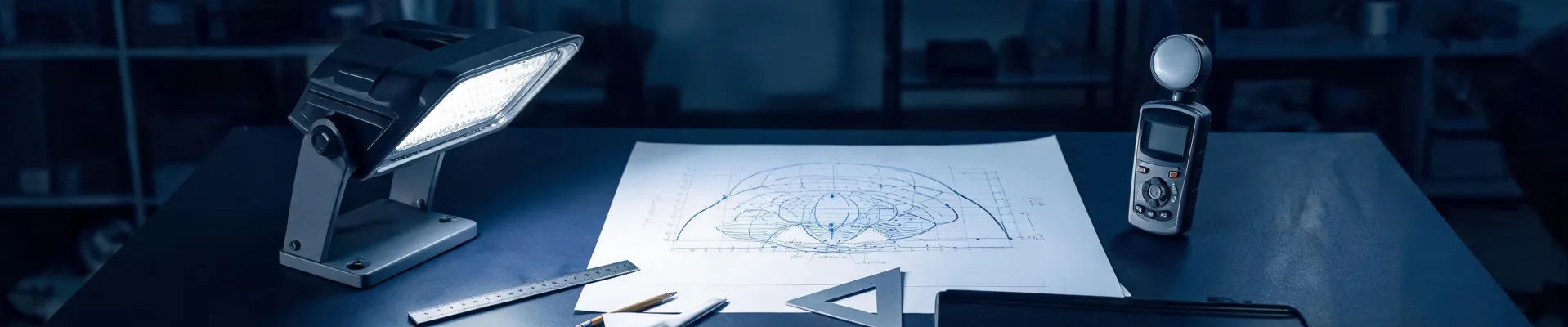
For a rab lighting ceiling light, the expectation is that every unit looks and performs identically to the sample you approved. That’s why we run photometric tests per IES LM-79-19 on every product platform, not just at development but across production batches. We also use a 3-step MacAdam ellipse as our chromaticity tolerance—roughly the limit most trained eyes can detect. When a batch drifts beyond that, we reject it, even if it’s technically “within industry standard” (which, honestly, often means a wider 5-step or 7-step ellipse). We’ve rejected a lot of fixtures over the years. That’s not a bad thing—it’s the entire point.
The most frustrating part of quality work is hearing “It’s close enough” from a vendor. You’d think written specs would prevent misunderstandings, but interpretation varies wildly. I’ve rejected shipments with a 300K color temperature difference across supposedly identical units. The supplier called it acceptable. I called it a brand liability.
There’s something satisfying about a perfectly uniform ceiling, though. After all the pressure to hit a deadline, seeing rows of fixtures with no hot spots, no flicker, and no color mismatch—that’s the payoff. And it’s why we keep the tolerance tight even when it costs more to produce.
Compliance Isn’t a Sticker
Beyond visuals, certifications matter more than ever. In the rab commercial lighting category, buyers look for DLC, UL, and IP ratings—and rightly so. But these are only meaningful if the product actually meets the standard in production, not just in a sample submitted from the factory. We’ve seen components labeled “DLC compliant” that failed testing when we independently verified them. That’s why we maintain an in-house verification protocol and send products to independent labs on a rotating basis. For anyone doing area light sourcing, this should be a core part of your checklist: ask for the LM-79 report, then ask how they test production units, not just prototypes.
I remember auditing a batch of what were supposed to be IP65-rated wall packs. On paper, they were compliant. In reality, the gaskets were thin enough to let in moisture after six months. The result was visible corrosion and a client who felt burned. It’s a painful reminder that compliance is about design, not labels.
What OEM and Private Label Buyers Miss
This next point is especially important if you’re building your own brand around someone else’s manufacturing. The classic area light oem vs private label debate focuses on cost and lead times. But the real question is: who owns the quality risk? If you put your name on a wall light that fails in the field, the contractor doesn’t blame the factory—they blame your brand. I remember a distributor who ordered 8,000 area lights for a municipal project; around 60 units had visible color drift. They spent about $18,000—maybe $22,000, I’m mixing it up with another project—on replacement fixtures and managing the client backlash. The lesson wasn’t about the fixture. It was about the trust.
If you’re sourcing under your own label, you need to set acceptance criteria in the contract—not a vague “industry standard,” but measurable tolerances like CCT ±100K, 3-step SDCM, and a minimum photometric performance. We’ve had partners ask for stricter specs than our default. That’s great. It means they understand that the fixture represents their brand, not ours.
A good wall light supplier will welcome those criteria. At Rab Lighting, we treat OEM and private label specs as seriously as our own—because the worst outcome for both of us is a product that damages your name.
But Isn’t Quality Expensive?
Let me address the question I get every time: “This all sounds nice, but what about price?” I hear that a lot from buyers managing tight budgets. Sure, there’s always a lower-cost option. But the real cost isn’t just the fixture—it’s the rework, the delayed occupancy, the angry client, the lost referral. Upgrading to a reliable driver or a tighter-bin LED adds something to the upfront cost. But the cost of a single failed project can easily exceed the total savings across an entire order. (Not to mention the quiet damage to your reputation.)
I ran a blind test with a group of contractors once. Same fixture shape, same measured lumen output—one with a premium optic, one with a budget diffuser. Around 70% couldn’t tell which was technically brighter. But over 80% said the one with even light distribution felt more professional. Perception is reality in this business. And that perception attaches to your brand.
At least, that’s been my experience across spec-grade projects. I’ve also seen budget projects go fine because the requirements were simple and the tolerances were wide. So I’m not saying quality is the only variable. I’m saying it’s the variable that keeps your brand safe.
The Bottom Line
So I’ll stay firm on this: quality is the brand. When you choose Rab Lighting, you’re not just buying a fixture—you’re buying a promise that every ceiling light, wall light, or area light you specify will look and perform the way it did in the sample. That consistency is what protects your reputation on every job. It’s not the easiest sales pitch, but it’s the one that pays off in referral business. (And, frankly, in better nights of sleep.)

Clara Whitmore is a lighting photometry and LED source analyst specializing in bulbs, tubes, strips, panels, and integrated luminaires. She interprets IES LM-79 measurements and TM-30 color rendition data through luminous flux, efficacy, intensity distribution, CCT, chromaticity, fidelity, and gamut metrics. She writes evidence-led comparisons for specifiers selecting source formats and luminaires for commercial interiors, industrial spaces, or horticultural systems where measured optical and color performance matter.