-
1. Verify the Photometric Report Before You Trust the Lumen Number
-
2. Confirm Compliance Listings Match Your Jurisdiction
-
3. Check the IP Rating, But Understand What It Actually Means
-
4. Verify Color Consistency—Not Just CCT and CRI
-
5. Read Warranty Terms, Not Just Warranty Length
-
6. For Private Label and Wholesale Orders, Verify Everything
-
A Note on Small Orders
-
Common Mistakes I See Repeatedly
I'm a quality compliance manager at a lighting manufacturer. I review every fixture before it reaches customers—roughly 300+ unique products a year, spanning ceiling lights, downlights, flood lights, wall lights, area lights, and linear systems. In 2024, I rejected 12% of first article deliveries. Not because the fixtures were defective. Because they didn't match the documentation. That's an important distinction.
This checklist is for distributors, contractors, and specifiers working with RAB Lighting products. Use it when you're evaluating a new SKU, approving a submittal, or setting up a private label agreement. Six steps, and the order matters.
1. Verify the Photometric Report Before You Trust the Lumen Number
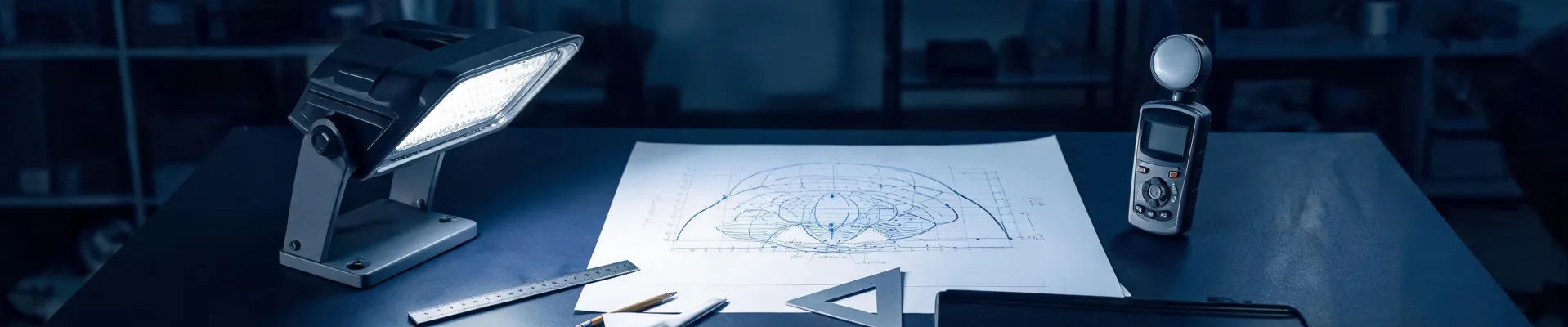
The lumen output on a spec sheet is a claim. The LM-79 report is the evidence. Every commercial fixture should come with one—it's the IES-standard test for total luminous flux, efficacy, and color characteristics. If a manufacturer can't produce an LM-79 report, that's a red flag, no matter how impressive the marketing sheet looks.
What I check on the report:
- Total lumens: does it match the spec sheet within 5%?
- Efficacy (lm/W): the efficiency of the whole fixture, not just the LED chip
- Ambient temperature: LM-79 is conducted at 25°C. If the report says something else, ask why.
- Witnessed vs. in-house testing: third-party lab reports carry more weight
Here's what trips people up: they quote initial lumens and ignore depreciation. A fixture might deliver 12,000 lumens at hour zero and 10,200 at hour 50,000. That's where the L70 rating matters—the hours until the LED depreciates to 70% of initial output. RAB publishes TM-21 projections for most fixtures. If you can't find one for the specific model you're spec'ing, ask your rep. They should send it within a day. If they hesitate, that tells you something.
2. Confirm Compliance Listings Match Your Jurisdiction
This is where recessed lighting compliance requirements get complicated. "UL Listed" isn't one thing. It's product-specific.
For commercial lighting, you're usually looking at UL 1598 (luminaires), UL 8750 (LED equipment), and sometimes UL 2108 for low-voltage systems. But the listing has to match the application. A recessed ceiling light in an insulated ceiling needs an IC (insulation contact) rating. An exterior wall light needs a Wet Location rating, not just Damp Location. Those are not interchangeable, and installers can fail inspection over exactly this kind of mismatch.
Then you have jurisdiction-specific requirements. California Title 24 mandates efficiency levels beyond standard UL listing. DLC (DesignLights Consortium) listing is separate again, and it's the gatekeeper for most utility rebates. DLC has two tiers—standard and Premium—and the rebate difference can be substantial.
I made this mistake myself: assumed a fixture was DLC Premium because my distributor swore it was. It wasn't. The rebate I'd promised the client didn't materialize, and I looked sloppy. Now I verify every compliance claim on the DLC website myself. It takes two minutes, and it saves me from trusting someone else's confidence.
3. Check the IP Rating, But Understand What It Actually Means
For outdoor fixtures—flood lights, wall packs, area lights—the IP (Ingress Protection) rating determines what the enclosure can withstand. The scale comes from IEC 60529: first digit is solid particle protection, second is moisture.
IP65: dust-tight, protected against water jets. IP66: dust-tight, protected against powerful water jets. IP67: dust-tight, protected against temporary immersion.
People assume a higher IP rating means a better fixture. That's backwards. The IP rating only describes the enclosure seal. A fixture can be IP67 and still have poor optics, a mediocre driver, or weak thermal design. And a well-designed IP65 fixture will outperform a poorly-built IP67 fixture in most real-world conditions.
For typical commercial projects, IP65 is enough—exterior wall lights, flood lights under eaves, area lights in parking lots. IP66 makes sense for hose-down environments like parking garages and food processing facilities. IP67 is rarely necessary unless the fixture sits in a flood zone, and you'll pay a premium for it.
One detail that's easy to miss: verify the IP rating applies to the fixture as installed. If a fixture has access plates or removable junction boxes, the rating often changes when those panels are opened. The spec sheet should state both conditions. If it doesn't, ask.
4. Verify Color Consistency—Not Just CCT and CRI
Every spec sheet lists CCT (correlated color temperature) and CRI (color rendering index). What they often skip is the SDCM—Standard Deviation Color Matching, sometimes called MacAdam ellipse steps.
SDCM tells you how consistent the color is across individual fixtures. A 3-step ellipse means tight control—fixtures will look uniform side-by-side. A 5- or 7-step ellipse means you'll see visible variation, especially in ceiling lights mounted in a row on an open office ceiling.
This is a real problem in the field. One fixture with a slight green tint next to one with a slight pink tint—both with identical CCT and CRI on paper—and the difference jumps out at you. Whoever installed it gets blamed, even though the specs matched.
RAB uses 2- and 3-step MacAdam binning on most commercial products. That's genuinely good. But verify it for your specific SKU. And if you're buying in phases—50 fixtures now, 50 in six months—ask about batch consistency. I've seen projects where two shipments from the same manufacturer looked different because the LED batches came from different production runs. Ordering the full quantity at once avoids that headache.
5. Read Warranty Terms, Not Just Warranty Length
"5-year warranty" sounds great. Then you read the exclusions.
I once reviewed a warranty that covered the fixture housing for 5 years, the driver for 3, the finish for 2, and labor for only 90 days. Technically a 5-year warranty. Practically, the most likely failure points had much shorter coverage.
What I look for in the fine print: driver coverage (the most common failure point in LED fixtures—is it covered the full term?), finish and fade coverage (critical for outdoor wall lights and flood lights exposed to UV), labor reimbursement (parts-only warranties leave you paying for installation labor), and the replacement process. Advance replacement means they ship you a new unit before receiving the failed one. That's a meaningful difference in downtime.
RAB's warranty—they call it "No-Hassle"—covers the full term on driver and finish, and they ship replacements in advance. That is rare in this industry. But I still read the terms for the specific fixture. Warranty terms can vary by product line, and "usual terms" isn't a contract.
6. For Private Label and Wholesale Orders, Verify Everything
If you're setting up a wall light private label program or buying flood lights wholesale, your verification process doubles. You're the brand now. The fixture carries your name. The documentation has to be airtight.
I lost two weeks once because of a communication failure. I approved a private label order with the note "standard spec," The factory interpreted that as their default spec. I meant the spec we'd written in the agreement, which specified a different driver brand. Both of us used the same words and meant different things. The mismatch surfaced at first article inspection, and we paid for it in schedule.
Here's my routine for any private label or wholesale order:
- Spec sheet vs. agreement: part numbers, dimensions, optics, driver, finish—compared line by line
- Label and packaging: your brand, your contact info, correct markings. For UL listed products, the label must show the correct file number and factory ID
- Certificates: UL, DLC, Energy Star—whatever the agreement promises, in writing
- As-built photometric report: confirms the fixture matches the declared design, not a close cousin
- First article sample: always. No exceptions. Even for a 20-unit order.
The process doesn't change with order size. I've seen $500 orders ship with incorrect labels and $50,000 orders ship with the wrong driver. The verification steps are identical.
A Note on Small Orders
I mentioned the $500 order. Let me be direct: a lot of suppliers treat small orders like they're not worth the paperwork. And a lot of buyers skip verification on small orders because they assume quantity means lower risk. Both are wrong.
When I was starting out, the vendors who took my small orders seriously are the ones I still specify for large projects today. Small orders test the relationship. Large orders depend on it. A supplier that won't provide documentation for 20 fixtures is telling you what their 2,000-fixture order will feel like.
Common Mistakes I See Repeatedly
Last section, and it's the one that will save you the most time:
Assuming one certification covers everything. UL Listed doesn't mean DLC listed. DLC listed doesn't mean Title 24 compliant. Each certification tests different things. Verify each one separately.
Comparing spec sheets instead of photometric data. Two fixtures can have identical spec sheet numbers and distribute light very differently in real mounting conditions. The photometric report shows you where the light actually goes.
Trusting a single sample. One unit passing inspection means one unit passed. It tells you nothing about consistency. Ask about batch-level testing. Good manufacturers keep the data.
Treating slow documentation as normal. If a manufacturer can't produce a DLC letter or updated spec sheet within a few business days, that's a red flag. Real documentation comes from real testing, and real testing has records.
Waiting to ask questions until after the PO. Every question gets harder to resolve once the purchase order is issued. Ask the hard ones before you commit.
RAB Lighting makes solid commercial fixtures. The photometric documentation is strong, the compliance portfolio is broad across UL, DLC, and Title 24, and the warranty terms are genuinely competitive. But good manufacturers still produce bad batches. The checklist exists because verification works. Do it every time.

Clara Whitmore is a lighting photometry and LED source analyst specializing in bulbs, tubes, strips, panels, and integrated luminaires. She interprets IES LM-79 measurements and TM-30 color rendition data through luminous flux, efficacy, intensity distribution, CCT, chromaticity, fidelity, and gamut metrics. She writes evidence-led comparisons for specifiers selecting source formats and luminaires for commercial interiors, industrial spaces, or horticultural systems where measured optical and color performance matter.