When you search for rab commercial lighting products, you'll find no shortage of spec sheets and product categories. What's usually missing is a buyer's perspective on where the brand truly shines and where it doesn't. After five years as the office administrator responsible for all lighting orders at a 200-person services firm, I've learned that vendor honesty matters more than vendor polish. RAB Lighting is the right choice for 8 out of 10 of my commercial projects—and just as importantly, I know which two they shouldn't get.
My experience is grounded in mid-sized commercial orders: ceiling lights, wall packs, parking lot area lights, and a handful of track lighting jobs. If you're outfitting a stadium or a 500,000-square-foot distribution center, my perspective won't fully apply. But for the kind of decisions that land on an admin buyer's desk, these conclusions have held up well.
Reason 1: The spec sheets don't make me chase
Why do I keep turning to RAB? The first reason is compliance—or more specifically, the paperwork that comes with it. I'm not an electrical engineer, so I can't speak to the nuances of photometric optimization. What I can tell you from a procurement angle: when a manufacturer makes compliance documentation easy, it saves my whole team time. RAB does this consistently.
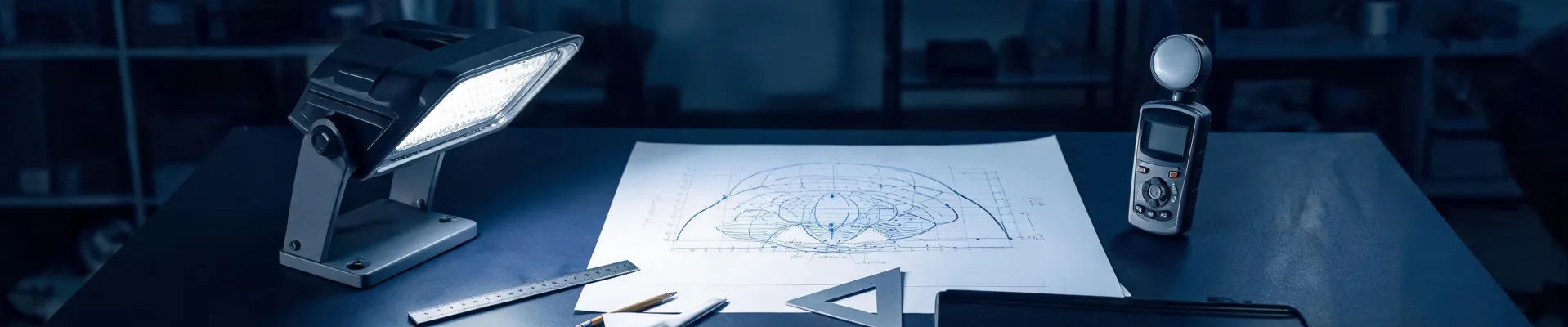
Every fixture we order for commercial use needs to meet UL and DLC requirements. I know enough to verify that photometric files follow IES LM-79-08 and that lifetime claims are backed by LM-80 data. RAB publishes those reports clearly, and that's rare. It sounds basic—until you've requested the same package from a competitor and waited two weeks. (I'm not naming names, but the uncomfortable silence was real.)
During our 2024 vendor consolidation, RAB stayed in the lineup because their documentation process didn't add to my stress. We cut our vendor list from eight to five, and one reason was exactly this: complete submittals, accurate UPS data, and no 2 a.m. worries about whether the paperwork would arrive on time. In the old days, a missing spec sheet cost us $2,400 in rejected expenses—not because the product was wrong, but because the invoice couldn't be matched to an approved submittal. That kind of soft cost never shows up in the unit price.
Reason 2: One catalog covers the whole building
What made my 2023 warehouse retrofit easier than expected was RAB's product breadth. They're not just a wall light manufacturer; they're also an area light catalog in its own right, with ceiling lights, track lights, sports lighting, and linear fixtures. That matters when you're managing procurement for multiple locations.
In 2024, I placed a single order that combined RAB lighting ceiling light fixtures for the second floor, wall lights for the stairwells, and area lights for the parking lot. That one PO replaced four separate vendor conversations. Fewer partial shipments, one warranty contact, and—when it came time to update our internal track lighting specification guide—I pulled the product data from the same website instead of opening five different portals. I'll be honest: the quantity break from ordering more didn't hurt, but the time savings were worth more.
That breadth is only valuable if you actually need that mix. If your company is a small office with a dozen fixtures, a local electrical supply house might serve you better than a manufacturer with wholesale focus. RAB isn't trying to be your friendly neighborhood shop, and I respect that.
Reason 3: Certainty is underrated
Here's the part I didn't see coming. Why does certainty matter so much? Because the cheapest fixture can become the most expensive when you count your own labor. In 2023, an alternate brand's missing DLC documentation held up our electrical contractor for two days. The change order cost more than the percent saved on the fixture price.
So glad I pushed back on that substitute. My gut said stick with RAB even though the numbers—the line item prices—favored the other quote. Every spreadsheet analysis pointed to the budget option, but something felt off about their responsiveness. Turns out that slow replies to pre-sale questions were a preview of slow post-sale support.
With RAB, the submittal package is complete, and the 5-to-10-year warranty (depending on product) is straightforward. When a project runs smoothly, the electrician gets the credit. When it doesn't, the light falls on me. RAB keeps that part boring—and for an admin buyer, boring is beautiful.
Where RAB doesn't fit
Now the honest limitation. If your project demands a truly bespoke architectural fixture—custom optics, special finishes, or a shape that doesn't exist yet—RAB probably isn't the fastest or best path. Their strength is scalable, specification-grade lighting, not one-off art pieces. I'd point you to a specialty manufacturer in that case, even though it means rebuilding some vendor relationships.
Same if you need tight integration with a proprietary building management system. That's a conversation for a controls specialist, not a general lighting manufacturer. And if you need identical fixtures on a truck by tomorrow morning, a local distributor who stocks RAB is going to beat a direct wholesale order every time. That's not a weakness; it's just supply chain reality.
I also hear the objection that RAB isn't a premium brand. Maybe. But premium for the sake of premium doesn't serve most commercial budgets. If your project requires heavy customization or a badge name for an investor, that's a different buying decision. My CFO approves RAB orders without hesitation, and that's a strong endorsement in my world.
Too often, buyers flip the logic. They reject a versatile brand because it isn't perfect for the extreme 20%—the boutique project, the stadium, the Mission Impossible deadline. That's a mistake. You don't need a vendor that's perfect for everything; you need one that's excellent for most things and honest about the rest.
That's why RAB stays on my preferred vendor list. Not because they're the cheapest—I can't claim that. Not because they're the most premium—they're not trying to be. RAB wins because they're spec-grade, their documentation is clean, and they don't pretend to be something they're not.
If you're evaluating rab commercial lighting options for your next project, don't just ask for a quote. Ask for the photometric reports, ask about the warranty process, and then ask what they'd recommend instead of their own product. The answer tells you more than any catalog.
For me, RAB's answer was simple: “If you need custom architectural aesthetics, talk to someone else.” That honesty earned my trust. It's why their fixtures keep showing up in my purchase orders.

Clara Whitmore is a lighting photometry and LED source analyst specializing in bulbs, tubes, strips, panels, and integrated luminaires. She interprets IES LM-79 measurements and TM-30 color rendition data through luminous flux, efficacy, intensity distribution, CCT, chromaticity, fidelity, and gamut metrics. She writes evidence-led comparisons for specifiers selecting source formats and luminaires for commercial interiors, industrial spaces, or horticultural systems where measured optical and color performance matter.