-
What This Guide Covers
-
A Quick List of Buying Questions
-
Is RAB Lighting a good choice for commercial lighting projects?
-
What does RAB commercial lighting actually include?
-
When should I consider a RAB Lighting ceiling light?
-
What should I compare in ceiling light wholesale quotes?
-
How do I evaluate sports lighting without a lighting designer?
-
What should I look for in a light fixture supplier?
-
Why is the lowest bid not the lowest final cost?
-
Should I standardize on RAB commercial lighting?
What This Guide Covers
For the past six years, I have been the person who signs off on commercial lighting purchases for a facility services company. During that time, I have tracked roughly $180,000 in lighting-related vendor spend. That doesn't make me a lighting designer. It does make me careful with a calculator. Yes, I keep a spreadsheet, and it has saved me more than once.
This FAQ looks at the purchasing side of lighting. I explain when RAB Lighting makes sense, what I count as RAB commercial lighting, how to compare ceiling light wholesale quotes, and what to look for in a light fixture supplier. If you are trying to evaluate sports lighting or wondering whether to standardize on one brand, these are the questions I use.
A Quick List of Buying Questions
- Is RAB Lighting a good choice for commercial lighting projects?
- What does RAB commercial lighting include?
- When should I consider a RAB Lighting ceiling light?
- What should I compare in ceiling light wholesale quotes?
- How do I evaluate sports lighting without a lighting designer?
- What should I look for in a light fixture supplier?
Start wherever the biggest problem is. The one question that protects your budget is usually not the first one on the bid form.
Is RAB Lighting a good choice for commercial lighting projects?
I would change the question slightly. Is it a verifiable choice? That is how I evaluate RAB. For most of the RAB Lighting equipment I have reviewed, the spec sheet is complete, photometric files are available, and the manufacturer documents the details that affect installation. That may sound obvious, but I have wasted time trying to get equivalent data from less organized suppliers.
Does that mean RAB is the answer everywhere? No. I still verify voltage, mounting, color temperature, controls, and whether the exact model number fits the ceiling type or pole. If the fixture cannot deliver the light distribution the space needs, a well-known name does not save the project.
What does RAB commercial lighting actually include?
RAB commercial lighting covers more than one category, which is one reason procurement people need clear product definitions. The indoor side includes LED ceiling lights, recessed and surface panels, downlights, linear fixtures, and high bay products. The outdoor side includes flood lights, wall packs, area lights, sports lighting, and street and roadway fixtures. I rarely need to cross-shop across a dozen brands when the application is standard.
That breadth is useful for inventory, but it still does not decide the fixture selection. I use the same review process whether I am buying one ceiling light or a full sports lighting package: compare documented performance, not catalog images.
When should I consider a RAB Lighting ceiling light?
When I say RAB Lighting ceiling light, I am usually talking about an LED fixture designed for a commercial ceiling system: a lay-in panel, surface-mount fixture, downlight, or linear light. Those products make sense when the ceiling construction is known and when the owner or engineer needs photometric data to approve lighting levels.
Take a standard 2x4 ceiling grid as an example. The mechanical dimensions, driver access, and light distribution have to match the room. A fixture can look like the right solution and still create issues if the housing depth is too tall for the plenum or the driver cannot be reached from below. RAB publishes enough specification detail for someone like me to catch those issues before the purchase order goes out.
What should I compare in ceiling light wholesale quotes?
Ceiling light wholesale quotes always look like they are just unit price comparisons. In practice, the lowest unit price is only the start. I compare carton quantities, minimum order amounts, advance replacement options, freight terms, lead time, and warranty claim handling. A line item that is cheap without a mounting accessory can be expensive after the accessory list is added.
One lesson from my own purchase history is to use complete model descriptions. Last year, my project team used the phrase standard 2x4 panel in an RFQ, and the supplier quoted a fixture with a different housing depth. Both sides said the same words, but we meant different products. We caught it before production, but only because someone checked dimensions. That is a communication failure, not necessarily a supplier failure.
My rule now is simple: if wholesale terms are not in writing, they are not terms. I want line by line pricing, not a friendly estimate.
How do I evaluate sports lighting without a lighting designer?
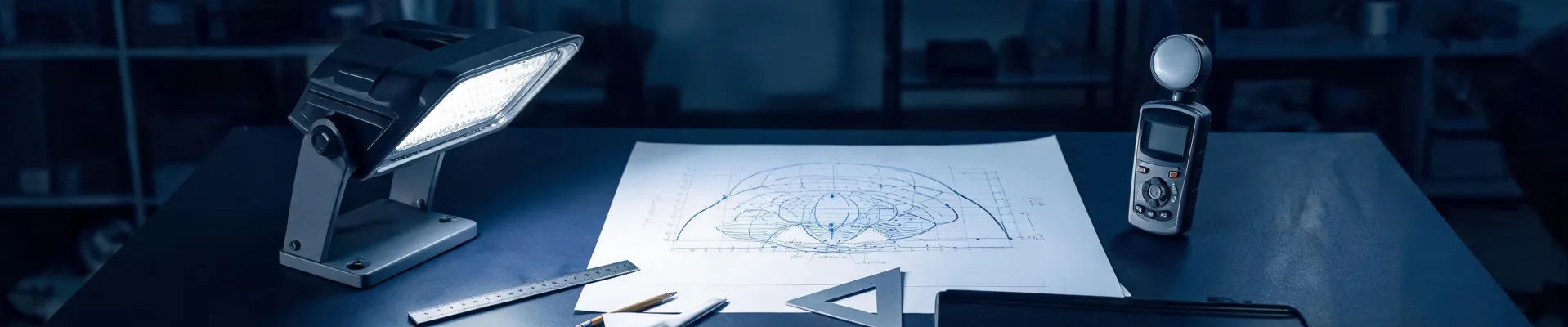
Sports lighting is the easiest place on a commercial project to get lost in fixture counts. Fixture count tells me nothing unless I know the maintained light level, the uniformity, the mounting height, and the amount of spill light that may leave the property. I ask the supplier to show me a photometric layout for the field or court. If the fixture cannot be modeled in the actual layout, I will not compare it.
In one recent sports lighting quote review, the package with the cheaper fixture price did not include the crossarms, controls, or freight. When we lined up the full scope, the price difference became smaller. That did not make the higher quote automatically right. It made the comparison honest.
I also ask about glare and aiming options. A field can have good footcandle levels and still create problems for neighbors or players if the optics are wrong. If the quote includes controls, I ask for the sequence of operation in writing.
What should I look for in a light fixture supplier?
When I select a light fixture supplier, price is a factor, but I start with five questions:
- Can they provide photometric and cutsheet files before the quote?
- Can they confirm the certification status of each model number? I still verify DLC QPL or UL Product iQ data myself when rebates or inspections require it.
- Will they put the lead time in writing?
- Do they have a practical process for damaged shipments and warranty claims?
- Do they explain substitutions before changing a product, not after?
An informed customer gets faster decisions. In my experience, the supplier that answers those questions clearly is more valuable than the one that simply offers the lowest first number.
Why is the lowest bid not the lowest final cost?
I do not believe every budget fixture is bad. I have seen inexpensive LED products work in locations where maintenance access is easy and the lighting requirement is simple. The problem is confidence. If the fixture does not provide IES data, driver specs, or a practical warranty path, I cannot calculate total cost with any confidence.
Total cost for a fixture includes freight, installation labor, replacement labor, energy, maintenance, and disposal. In 2023, I approved a lower-price light fixture on a project because the initial price helped the budget. The first failure required replacing the entire unit rather than just a driver, and the after-hours labor cost more than the price difference. I would not call that a bad purchase in every possible project. I would call it a bad fit for our maintenance plan.
Should I standardize on RAB commercial lighting?
I have mixed feelings about brand standardization. On one hand, fewer manufacturers means fewer catalogs, more consistent drivers, and easier spare parts. On the other hand, no manufacturer should win a project just because a buyer does not want to compare options.
My current approach is to use RAB commercial lighting as a baseline for common fixture types. If another manufacturer can show equal documentation and a feature that solves a site issue, I will still review it. Standardization is a preference, not a promise.
I also keep an alternative vendor list by product category. During supply chain delays, that list has protected us more than once. It takes a few hours each year to update, and it keeps the whole budget from depending on one warehouse.

Clara Whitmore is a lighting photometry and LED source analyst specializing in bulbs, tubes, strips, panels, and integrated luminaires. She interprets IES LM-79 measurements and TM-30 color rendition data through luminous flux, efficacy, intensity distribution, CCT, chromaticity, fidelity, and gamut metrics. She writes evidence-led comparisons for specifiers selecting source formats and luminaires for commercial interiors, industrial spaces, or horticultural systems where measured optical and color performance matter.