-
1. How do you choose a wall light for wholesale without a lighting designer on staff?
-
2. Why does RAB commercial lighting keep showing up on wholesale bid lists?
-
3. Why is a RAB Lighting ceiling light part of an outdoor lighting sourcing guide?
-
4. What should a RAB wall light private label quote include?
-
5. Which certification requirements matter for outdoor lighting sourcing and private label?
-
6. Can small buyers get fair wholesale pricing and minimum order terms?
-
7. What should I ask before adding a private label wall light to my catalog?
-
8. Should I order samples before committing to a wholesale wall light order?
I'm not a lighting engineer or an electrical contractor. I'm the office administrator for a 38-person industrial services company, and since 2020 I've managed all facility lighting orders—roughly $120,000 a year across 15 vendors. That has meant everything from replacing old fluorescent troffers to picking a RAB Lighting ceiling light for a break room and specifying RAB wall packs for the loading dock. If you need to choose a wall light for wholesale, or if wall light private label is on your desk for the first time, these are the questions I would ask again.
1. How do you choose a wall light for wholesale without a lighting designer on staff?
Start with the application, not the catalog photo. Wall lights can be outdoor wall packs, sconces, step lights, or site fixtures. For wholesale, you need the product your customer's contractor can install without creating custom adapters. I screen fixtures by asking four questions: Does the model mount to a standard 4-inch junction box? Does it accept both 120V and 277V? Does the LED driver have an access panel for replacement? Is there an IES file for this exact model? When we include RAB Lighting in an outdoor wall light search, it is often because the cut sheets answer those four questions before I chase a rep. It took me three years and about 60 fixture inquiries to understand that the phrase 'wall light wholesale' describes a buying channel, not a simple product spec. The fixtures that sell without headaches are the ones with documentation, not the ones with the most photos.
2. Why does RAB commercial lighting keep showing up on wholesale bid lists?
Because commercial buyers are rarely buying the fixture for themselves. We are buying what the fixture does for an electrician, the owner, and a finance team. RAB commercial lighting is useful because its product line covers indoor ceiling lights and outdoor wall lights, and its documentation is detailed enough to send to an architect. I also like that the range is broad enough to bundle. For wholesale, every vendor adds purchase orders, freight minimums, warranty coordination, and submittal paperwork. If I can quote one manufacturer for a ceiling light package and an exterior wall light package, I reduce my own overhead. But the brand name is not a blanket approval. Every RAB SKU still needs model-level checks for voltage, mounting, wet location rating, and the certifications the local building department wants.
3. Why is a RAB Lighting ceiling light part of an outdoor lighting sourcing guide?
Because a building does not usually stop at the wall. In our 2024 office conversion, we used a RAB Lighting ceiling light in the work area and RAB wall packs on the exterior. I assumed those would be two separate purchase orders. Then the general contractor asked for one submittal package, and the supplier was able to provide photometric data, cut sheets, and lead times for both products. That coordination saved about a week. For outdoor lighting sourcing, ask what else the same customer is buying. If you can quote exterior wall lights and interior ceiling lights together, the purchase order gets bigger and the coordination burden gets smaller. That is especially useful when you are wholesaling to contractors who do not have time to chase product documentation.
4. What should a RAB wall light private label quote include?
When you request a RAB wall light private label quote, it should spell out minimum quantity, label application method, catalog model number, packaging changes, and warranty responsibility. A private label product is not just a stock fixture with your logo. If it fails in the field, your customer calls you, not the manufacturer. The warranty process matters more than the warranty length. Looking back, I should have asked about that during our first private label test order. At the time, I was focused on unit price, so I forgot to ask who handled return shipping after a field failure. The quote looked complete because the line items were itemized. The biggest missing line was replacement logistics. Ask whether the replacement goes directly to the end user, whether you inspect it first, and which party covers freight. If those details are vague, the quote is not finished.
5. Which certification requirements matter for outdoor lighting sourcing and private label?
Check certifications at the model level, not the brand level. A wall light exposed to rain should be UL Listed for wet locations if your local code requires a listed fixture. In light-sensitive areas, ask for the BUG rating or the applicable qualified products list. Then think about how you describe the product. If you private label it, you become responsible for your marketing claims. Per FTC guidelines (ftc.gov), advertising claims must be truthful, not misleading, and substantiated. The FTC Green Guides also discuss environmental terms like 'recyclable.' This was accurate as of January 2025, but standards and product listings change. I'm not a compliance attorney, so before I approve packaging proofs, I have the legal language reviewed by someone who is.
6. Can small buyers get fair wholesale pricing and minimum order terms?
Small orders should not be treated like an inconvenience. The vendors who answer a $1,500 inquiry carefully are the vendors who get the $30,000 follow-up. In our case, a starting order of eight RAB commercial lighting ceiling lights and 12 outdoor wall packs was enough to establish a supplier relationship. No one made us feel small. That is not luck; it is good vendor qualification. At the same time, be honest about volume. Private label and OEM pricing improves when volume is predictable because labels, packaging, and production schedules cost money. I do not expect a sample quantity to get truckload pricing. I do expect the supplier to explain the price tiers. If a supplier uses a high minimum order quantity to avoid doing the work, that is different from a legitimate setup cost. Ask what the MOQ actually covers.
7. What should I ask before adding a private label wall light to my catalog?
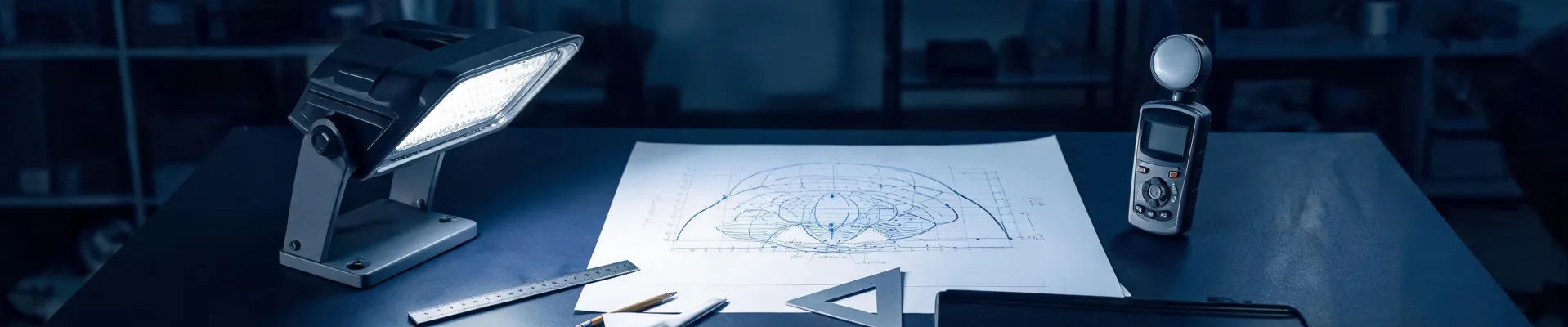
Ask about the failure process. If you sell that wall light under your private label, the end customer will not call RAB first. They will call you. Before adding a custom product to a catalog, make sure the supplier can explain who ships the replacement, who pays freight, whether the driver can be swapped in the field, and whether a claim requires the old fixture to be returned before the new one is sent. Also request the IES file for the exact model and check the beam pattern against the mounting height you expect customers to use. A wall light can look attractive in a promotional photo and still create harsh shadows on a sidewalk. The best question is not 'What is the price?' It is 'What happens if this fixture fails?' Trust me on this one.
8. Should I order samples before committing to a wholesale wall light order?
Yes, but test the sample the same way your customer will. Mount it on the actual wall surface, at the same height, with the same voltage and the same operating hours. Compare the light distribution at night against the fixture it replaces. We once tested a wall pack on plywood in a warehouse. It looked fine during the day. At night, the beam did not cover the step at the exit door. That sample mistake was not the supplier's fault; it was my testing process. The sample taught me to have an electrician install it exactly as it would be installed on a real building. A sample order is cheap insurance, but only if you use it to check photometrics, maintenance access, and driver behavior—not just how the housing looks on a shelf.

Clara Whitmore is a lighting photometry and LED source analyst specializing in bulbs, tubes, strips, panels, and integrated luminaires. She interprets IES LM-79 measurements and TM-30 color rendition data through luminous flux, efficacy, intensity distribution, CCT, chromaticity, fidelity, and gamut metrics. She writes evidence-led comparisons for specifiers selecting source formats and luminaires for commercial interiors, industrial spaces, or horticultural systems where measured optical and color performance matter.