-
What makes RAB commercial lighting different for specifiers?
-
How do I choose a RAB lighting ceiling light for a commercial space?
-
How do I read flood light specifications without guessing?
-
What should I ask before using RAB as a wall light OEM supplier?
-
What should a flood light wholesale cost guide actually include?
-
Why should I care about DLC listing and UL listing on RAB lighting?
-
What’s the most overlooked spec in outdoor flood lights?
If you’re selecting RAB Lighting for a commercial project—ceiling lights, flood lights, wall lights, or an OEM program—you don’t need another brochure. You need the checklist I use when a fixture lands in my inspection area. I’m a quality/compliance manager in the lighting industry. Over the past four years, I’ve reviewed 200+ fixtures a year against specification sheets, UL/DLC requirements, and photometric data. In Q1 2024, I rejected 9% of first-article samples for spec drift. These are the questions that actually come up.
What makes RAB commercial lighting different for specifiers?
When buyers search for “RAB commercial lighting,” they’re usually looking for products that will survive a submittal review. That means the datasheet, photometric file, and physical fixture all tell the same story. In my experience, that consistency is what separates spec-grade brands from the rest.
I’ve seen fixtures arrive with a different CCT than the spec sheet, a missing DLC number, or an IP rating that doesn’t hold up to a simple gasket inspection. During my Q1 2024 audit, about 30% of first submissions had at least one of these problems. The RAB first-article samples I’ve reviewed have been more consistent. (Should mention: not every RAB SKU is DLC listed—always check the specific model on the DLC Qualified Products List before assuming a rebate.)
Look, I’m not saying budget brands are always bad. I’m saying that when compliance requirements are on the table, spec-grade isn’t optional.
How do I choose a RAB lighting ceiling light for a commercial space?
There are two parts to this: application and documentation. RAB’s ceiling light lineup includes LED panels, downlights, linear, recessed, and surface-mount fixtures. First define the ceiling type, mounting, and light levels you need. Then pull the spec sheet and check:
- Delivered lumens and CCT—3000K, 3500K, or 4000K are the usual choices
- CRI: 80+ is common, but 90+ matters for retail or design spaces
- Dimming driver and control compatibility
- Emergency battery option if required by code
- Damp or wet location rating for humid areas
The most overlooked item? A photometric file. If the manufacturer doesn’t publish an .ies file, the lighting layout is guesswork. RAB’s spec sheets usually include one. Oh, and check the dimensions—grid ceiling modules have no patience for “sort of.”
How do I read flood light specifications without guessing?
Flood light specifications are readable once you focus on five numbers: input wattage, delivered lumens, efficacy (lm/W), CCT, and beam angle. Then add IP rating and surge protection.
The common trap is assuming two “150W” flood lights are comparable. Delivered lumens can be 13,000 on one model and 19,500 on another. Look for 100 lm/W or higher on most commercial LED floods; better products are often above 130 lm/W.
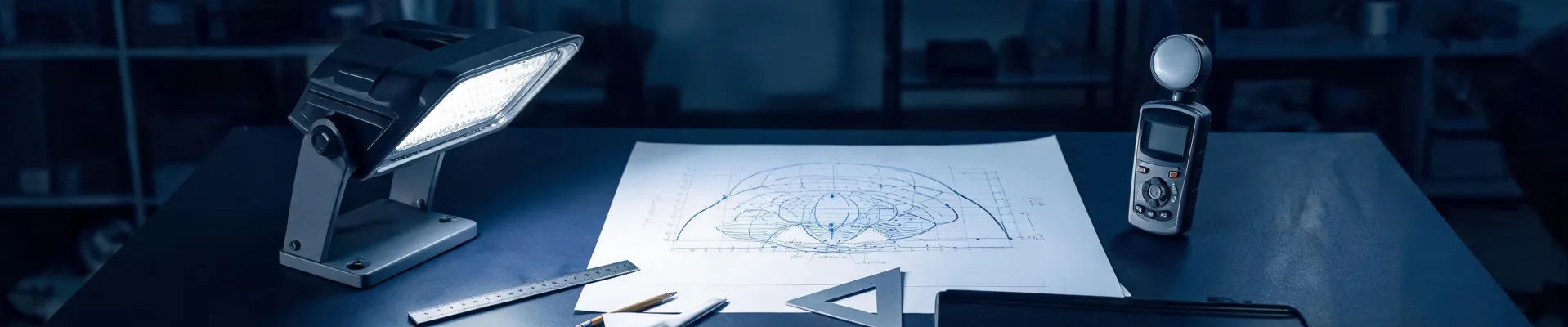
Beam angle matters too. A 30° flood light and a 90° flood light are different tools even at the same wattage. And don’t skip the .ies file if the fixture is going into a layout program. The surprise isn’t usually the wattage; it’s how much light spills outside your target area.
For outdoor installs, I also verify the IP rating—IP65 is a common minimum, IP66 is more robust—and check whether the datasheet documents surge protection. A flood light without surge protection is one storm away from a service call.
What should I ask before using RAB as a wall light OEM supplier?
Wall light OEM / private label / wholesale requests are where I see communication failures. Years ago, I said “4000K, DLC listed” and the vendor heard “something close is fine.” The fixture arrived at 3500K with no listing number. Now I put every requirement in writing, including tolerances.
If you’re evaluating RAB for wall light OEM, ask:
- What compliance documentation comes with the fixture? (UL, DLC, .ies files)
- Can you customize CCT, optics, drivers, or finish without losing the listing?
- What are the MOQs and lead times for a private-label run?
- How are warranty claims handled when the lighting is sold under your brand?
Here’s the thing: a pretty fixture with no compliance paperwork is a liability, not a product. A good OEM partner gives you the same engineering rigor as their own brand. RAB’s spec-grade baseline makes that conversation easier—but you still need to get the requirements in writing.
What should a flood light wholesale cost guide actually include?
I have mixed feelings about “wholesale cost guide” articles that just quote a price per watt. The fixture cost is one line item. The real cost is lifecycle: fixture cost, compliance, labor, rebates, and replacement.
Public distributor listings I reviewed in January 2025 show commercial-grade LED flood lights—typically 100W to 400W equivalents—roughly between $150 and $600. That range depends on wattage, optics, certification, and housing. Don’t treat it as a quote; treat it as a starting point.
Here’s where transparency matters: ask “what’s NOT included” before “what’s the price.” Does the fixture have a DLC listing that qualifies for the utility rebate? Is the .ies file available for the submittal? Has the product been tested to UL 1598 and UL 8750? If not, the “savings” can disappear into rework and rejected inspections.
A $12/unit saving turned into $4,800 of lost rebate on a 400-unit parking lot because the fixture wasn’t on the DLC list. That’s the definition of penny wise, pound foolish.
Why should I care about DLC listing and UL listing on RAB lighting?
For commercial projects, these two listings move a project faster and safer. UL listing means the fixture meets recognized safety standards for construction and electrical risk. DLC listing matters for utility rebates and performance consistency. Many specifiers won’t approve a fixture without both.
I’ve learned to verify listings on the official databases—DLC Qualified Products List and UL Product iQ—rather than trusting the cut sheet. That lesson came from a project where the submittal had a DLC number for a similar but different SKU, and the utility pushed back. Listing databases exist for a reason.
And here’s the part people forget: a listing can be model-specific. A fixture may be UL listed but not DLC listed; a wall pack from the same family may have one listing and not the other. It’s not about the brand being “good” or “bad.” It’s about checking the SKU you’re buying.
What’s the most overlooked spec in outdoor flood lights?
IP rating gets attention, but surge protection doesn’t. That’s backwards. IP rating tells you how well the fixture handles water and dust. Surge protection tells you whether it survives voltage spikes from the line. Outdoor commercial lighting is exposed to all kinds of electrical noise—especially in parking lots and industrial yards.
I run a quick check: is there documented surge protection on the datasheet, or just a marketing phrase? Ideally, the spec sheet includes a surge rating and maybe an MOV. The cost is small compared to pulling a bucket truck to replace a fried fixture.
I’ve had projects where I second-guessed whether surge protection was worth the added cost. It was. That said, don’t ignore IP rating. IP65 is a common minimum for outdoor wall lights; IP66 is more robust for direct rain. I’m not saying every fixture needs the max rating—I’m saying verify the actual rating, not the product name. “Waterproof” is a marketing word. “IP66” is a spec.

Clara Whitmore is a lighting photometry and LED source analyst specializing in bulbs, tubes, strips, panels, and integrated luminaires. She interprets IES LM-79 measurements and TM-30 color rendition data through luminous flux, efficacy, intensity distribution, CCT, chromaticity, fidelity, and gamut metrics. She writes evidence-led comparisons for specifiers selecting source formats and luminaires for commercial interiors, industrial spaces, or horticultural systems where measured optical and color performance matter.