-
Who This Checklist Is For
-
Step 1: Define the Fixture Requirements First
-
Step 2: Ask for the Photometric Report, Not Just the Data Sheet
-
Step 3: Verify the Compliance and Certification Trail
-
Step 4: Confirm Lead Times and Stock in Writing
-
Step 5: Read the Warranty Like It's a Legal Contract
- Step 6: Don't Assume Ceiling Light Capability Means Outdoor or OEM Capability
-
Three Mistakes That Cause Lighting Orders to Go Wrong
-
The Payoff: When the Checklist Works
Who This Checklist Is For
If you're responsible for buying lighting fixtures on a commercial project, you already know that a ceiling light order is not the place to wing it. The wrong fixture can delay a schedule, fail inspection, or make a finished space look wrong in a way that's hard to explain to a client.
This checklist is for contractors, distributors, facility managers, and lighting specifiers who need to answer one question: what to look for in a ceiling light supplier before you commit. Use it when you're comparing suppliers, approving submittals, or trying to recover from an order that just fell through.
In my role coordinating lighting for commercial and municipal projects, I've handled more than 40 rush orders over the last five years. A lot of those were because someone skipped a step on the front end. The good news: most supplier problems are predictable. Here are the six checks I run through.
Step 1: Define the Fixture Requirements First
Before you talk to any supplier, write down the actual requirements. Not 'a nice LED ceiling light'. Real numbers.
- Light output in lumens, not wattage. Lumens tell you how much light the fixture produces; wattage only tells you what it draws.
- Color temperature and CRI. 3000K? 4000K? CRI 80 or 90? Those choices change how the space looks.
- Mounting style and dimensions. Recessed, surface, or suspended? Check ceiling type and plenum depth.
- Voltage and controls. 120V, 277V, 0-10V dimming, occupancy sensors, emergency battery backup.
- Environment rating. Is it a dry location, damp location, or wet location? IP rating matters.
What I mean is that a vague request produces vague quotes. If you don't give every supplier the same spec, you're not comparing prices or quality. You're guessing.
For RAB commercial lighting projects, the same rule applies. I've seen buyers ask for a 'RAB Lighting ceiling light' and then get three different models because they didn't define size, distribution, or controls upfront. The brand is helpful; the spec is what matters.
Step 2: Ask for the Photometric Report, Not Just the Data Sheet
The spec sheet is marketing. The photometric report is evidence.
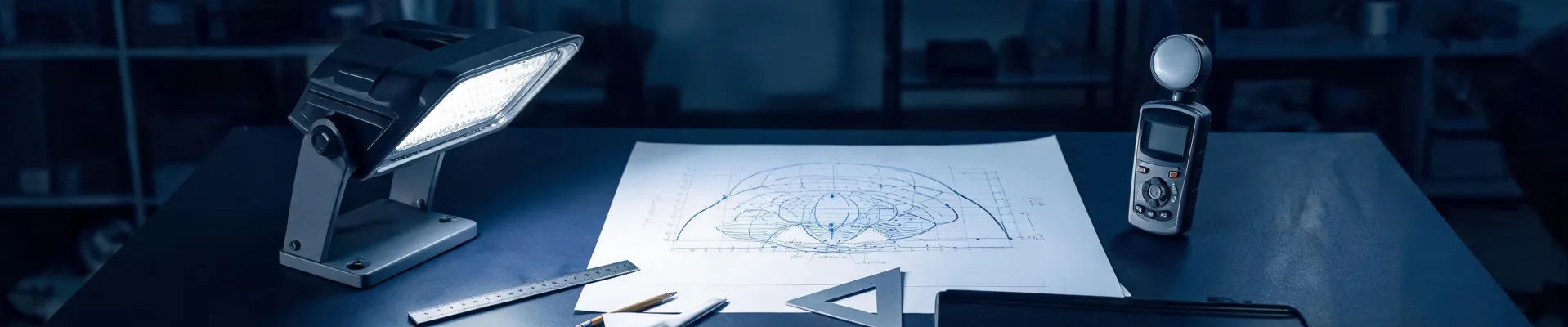
A good supplier will give you an .ies file or a PDF with photometric data based on IES LM-79 and LM-80 testing. That's what tells you where the light goes, how uniform it is, and whether the fixture will create glare or dark spots at your mounting height.
Real talk: I only believed in checking photometric reports after skipping that step once and approving a 'high-output' ceiling fixture that left a conference room looking like a cave. The fixture hit the numbers on the datasheet, but the distribution was wrong for the room. We had to swap all eight fixtures after installation. That's not a mistake I make twice.
The surprise wasn't the price difference between 'budget' and 'premium' fixtures. It was how many premium-looking datasheets had vague or incomplete test data. Turns out a polished PDF doesn't mean independent testing was done.
If you're evaluating a brand like RAB Lighting, check whether the product page includes a photometric test file or a link to IES data. If it's not there, ask. And if the supplier can't produce one, that's a red flag.
Step 3: Verify the Compliance and Certification Trail
Commercial LED fixtures are regulated. The rules depend on your location and the building type, so don't assume one certification covers everything.
At a minimum, ask about:
- Safety listing: In the U.S., luminaires are typically tested under UL 1598 or an equivalent standard.
- Performance qualification: If the project needs utility rebates, the fixture should be on the DLC list or meet local energy code requirements.
- Location ratings: UL damp/wet ratings or IP ratings for outdoor, shower, or industrial areas.
- Controls compatibility: Check that the driver works with the specified sensors, dimmers, or building automation system.
Here's the thing: you don't want to discover a compliance problem at inspection. That's a very expensive time to learn the fixture doesn't meet Title 24 or the utility rebate program.
Good suppliers list these details openly. In my experience, spec-grade companies like RAB Lighting put certification data in the spec sheet or on the website. If you have to dig for basic safety compliance, ask yourself how they'll handle support after the sale.
Step 4: Confirm Lead Times and Stock in Writing
This is where I see the most emergency calls. A project is supposed to start Monday, and the 'available' fixtures are actually on a six-week backorder.
In late 2024, I needed 40 ceiling fixtures in five days after a distributor missed a ship date. The manufacturer didn't cause the issue, but we had to scramble to find a different supplier that had stock and could commit to a hard delivery. It worked, but it cost extra freight and a lot of stress.
Ask for a written lead time at quote time, not at order time. Include these questions:
- Is this item in stock or made to order?
- What is the confirmed ship date, not the estimated ship date?
- What happens if a line item is backordered? Can you split the shipment?
- Are expedite options available and how do they affect cost?
The value of a reliable supplier isn't just speed. It's certainty. If you know the fixtures will be there on the date promised, you can schedule labor, inspection, and occupancy around it.
Step 5: Read the Warranty Like It's a Legal Contract
Many spec-grade LED fixtures come with long warranties, but the details are what matter.
Ask for the warranty document before you purchase. Check whether it covers the LED board, driver, and housing separately. Drivers often fail before LED chips, so a replacement driver policy is important. Also check whether labor and shipping are included, and whether the warranty is valid if the fixture is bought through a distributor.
The reason I push this is simple: if a fixture fails in the field, your client won't call the manufacturer. They'll call you. The quality of the fixture is part of the quality of your work. A supplier that stands behind its product is protecting your brand, not just its own.
That's the quality-as-reputation lesson I've learned the hard way. The product your client receives shapes how they judge everything else about your project.
Step 6: Don't Assume Ceiling Light Capability Means Outdoor or OEM Capability
If your project includes outdoor lighting or a private-label component, the checklist gets wider. RAB Lighting offers both, but the evaluation should be just as rigorous.
For Outdoor Lighting OEM
- Custom housing colors and driver options
- Private label branding and packaging details
- Minimum order quantities and sample lead times
- Certification process for modified fixtures
For Sports Lighting Specifications
- Photometric distribution at your exact mounting height
- Glare control for players and surrounding areas
- Wind load and vibration ratings for poles
- Controls from basic switching to event modes
- Reference projects with measured results
Outdoor lighting OEM is not the same as picking a stock ceiling light. You're dealing with custom housings, driver options, mounting configurations, branding, packaging, and order minimums. A custom fixture still needs the same safety and performance testing as a standard one.
And for sports lighting specifications, the list is even more technical. Don't assume a supplier can handle sports lighting just because they make good ceiling lights.
Three Mistakes That Cause Lighting Orders to Go Wrong
Here are a few patterns I see repeatedly, especially when someone is under time pressure.
- Buying on wattage alone. A higher-wattage fixture isn't necessarily brighter in the way you need. Compare lumens, distribution, and efficiency.
- Forgetting ceiling height. A fixture with a beautiful data sheet can look terrible from 25 feet up. Check beam angle and mounting height recommendations.
- Waiting too long to ask for documents. Photometric files, warranties, and certifications should be part of the quote. If you ask after the order, you've lost leverage.
To be fair, some of these mistakes are understandable. Buyers have deadlines, budgets, and pressure. But the supplier you choose is still your responsibility. That's why I'd rather spend two extra days validating a supplier than two months fixing a bad fixture installation.
The Payoff: When the Checklist Works
There's something satisfying about a lighting order that arrives on time, matches the photometric report, and installs without a single surprise. After all the coordination and rush-fee stress, that's the payoff.
Choose a supplier the way you want clients to choose you: on evidence, not promises.
If you're starting from zero, use RAB Lighting as a benchmark. Look at how they document their commercial ceiling lights, outdoor lighting OEM capabilities, and sports lighting specifications. Not because any brand is automatically right for every job, but because spec-grade documentation should be the baseline.
That's what to look for in a ceiling light supplier: evidence. A supplier you can trust is one that gives you the numbers, the certs, and the schedule before you ask. Everything else is marketing.

Clara Whitmore is a lighting photometry and LED source analyst specializing in bulbs, tubes, strips, panels, and integrated luminaires. She interprets IES LM-79 measurements and TM-30 color rendition data through luminous flux, efficacy, intensity distribution, CCT, chromaticity, fidelity, and gamut metrics. She writes evidence-led comparisons for specifiers selecting source formats and luminaires for commercial interiors, industrial spaces, or horticultural systems where measured optical and color performance matter.